
A candidate can look excellent on paper and interview well, yet still struggle when the work calls for specialized terminology, careful listening, or the right register under pressure.
For a language service provider, finding that out after the first assignment is costly. The recruiting team has to revisit its decision, operations has to find coverage, and QA may already be handling a client concern.
A structured language assessment gives the team useful evidence earlier. AlfaOne helps LSPs assess the skills a particular role requires, review the results in one place, and decide what should happen next.
The assessment supports the decision. People still make it.
General fluency does not always equal job readiness
Everyday conversation tells you something about a person's language ability, but it does not show the whole picture. Medical interpreting, legal work, financial services, and customer support each place different demands on language professionals.
A useful assessment should reflect those demands. That may mean testing listening and spoken responses for an interpreter, written accuracy for a translator, or terminology and register for a specialized client program.
This matters across the LSP, not only in recruiting:
- Recruiters need a fair and consistent way to compare candidates.
- Operations teams need confidence that someone is ready for the assignment being offered.
- QA leaders need results they can compare with later performance.
- Trainers need to see the specific gap before choosing a course or coaching plan.
When these teams work from the same evidence, handoffs become easier and decisions are simpler to explain.
Use assessment before making the hiring decision
Resumes, certifications, references, and interviews all have a place. A role-specific assessment adds something different: a chance to see how the candidate handles tasks that resemble the work.
With AlfaOne, an LSP can create an assessment around a language, role, domain, and level. Depending on the job, it can include speaking, writing, reading, and listening activities. Candidates or employees receive a secure invitation and can complete the assessment from their device.
The results help the recruiting team ask better questions:
- Does the candidate understand and respond accurately in a realistic situation?
- Are the vocabulary and register appropriate for the domain?
- Is the person ready now, or would focused coaching close the gap?
- Have all candidates been reviewed against the same criteria?
AlfaOne does not decide who gets hired. It gives recruiters and qualified reviewers another source of evidence to consider alongside experience, credentials, and the interview.
Bring the same standard into quality assurance
Assessment results become more valuable when they do not disappear after onboarding.
QA leaders can use the same criteria to confirm readiness for a new program, investigate a performance concern, or compare an early assessment with later work. For higher-risk assignments, the assessment can use realistic scenarios from healthcare, legal services, finance, or customer support.
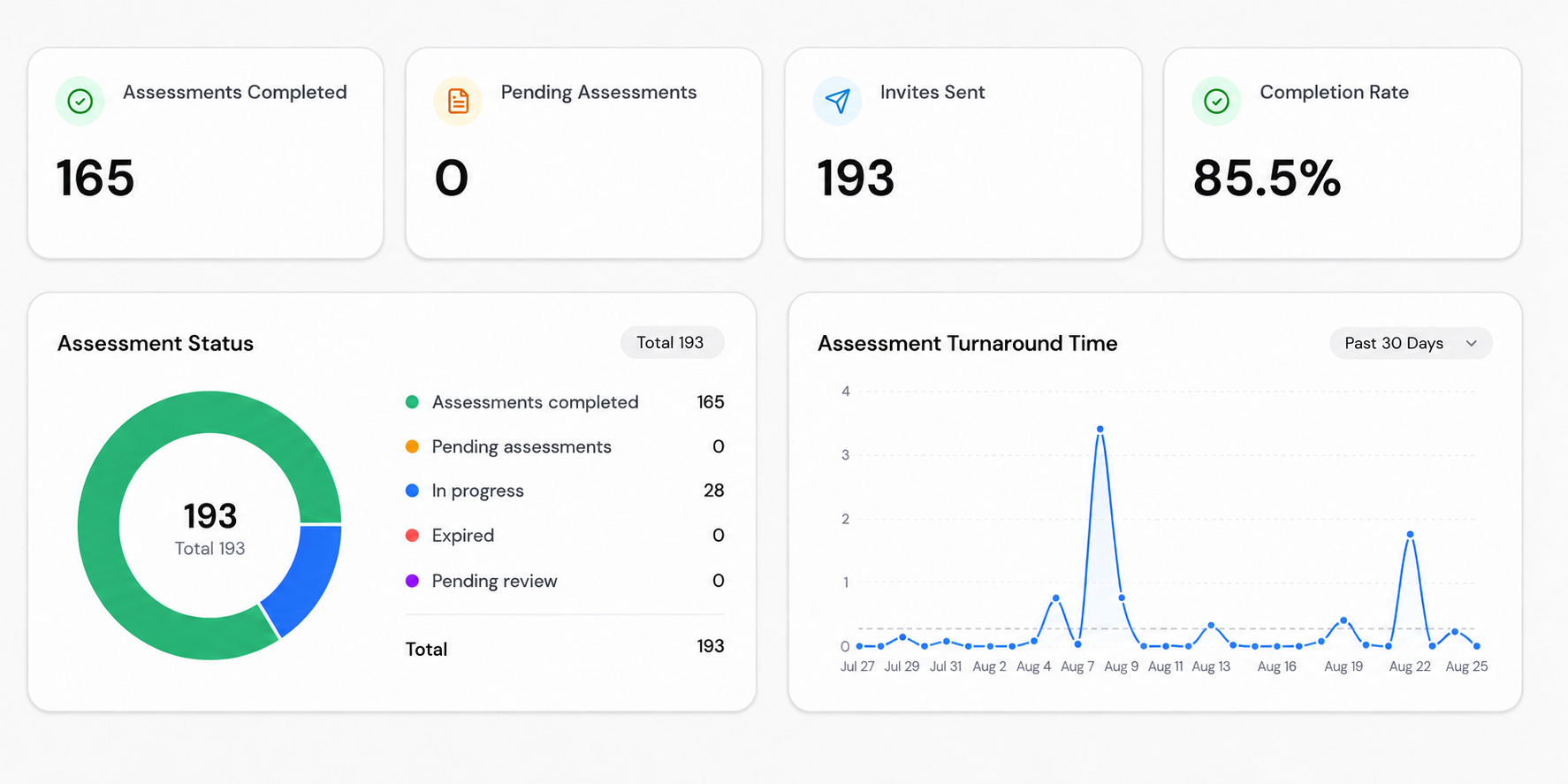
AlfaOne provides an AI-assisted first review of areas such as grammar, vocabulary, fluency, and comprehension. A qualified reviewer confirms the score, considers the context, and makes the final call.
That separation is important. Technology can organize the evidence and reduce repetitive work. People remain responsible for qualification, feedback, coaching, and assignment decisions.
Give training a clearer target
Broad feedback is hard to act on. Telling someone to “improve their language skills” does not tell them what to practice or how progress will be measured.
Assessment results can make the conversation more specific. A person with strong comprehension but inconsistent terminology may need domain practice, not a general course. Someone who communicates confidently but makes recurring written errors needs a different plan.
After focused training, the LSP can reassess the same skill area. The comparison gives the trainer and learner a practical way to see what changed and what still needs work.
Start with one decision that is difficult today
There is no need to begin with every role and language. A focused pilot is easier to manage and produces clearer lessons.
Choose one recurring decision, such as qualifying interpreters for a medical program, screening bilingual customer-service candidates, or identifying training needs in an existing team. Then agree on what the pilot should show.
Useful questions include:
- Do AI-assisted suggestions and reviewer scores generally point in the same direction?
- Does the assessment shorten the current screening or qualification process?
- Do the results connect with later QA findings or assignment readiness?
- Does reassessment show whether focused coaching helped?
The pilot should also confirm practical requirements such as language coverage, scoring validation, data protection, reporting, access, and integration with existing systems.
A practical first step
Select one role and language pair. Define the skills and level the work requires, agree on the review criteria, and invite a representative group. When the results are ready, compare them with reviewer judgment and any relevant downstream QA evidence.
If that evidence helps the team make a clearer decision, expand gradually to other roles, languages, or client programs.
AlfaOne gives LSP teams a way to see language readiness earlier and direct attention where it is most useful. Recruiters still choose whom to hire. QA leaders still set the standard. Trainers still decide how to coach. They simply have better information when they do it.
See how AlfaOne works or speak with the AlfaOne team about a focused pilot.